Atelier31 August 20263 min
The Outsider
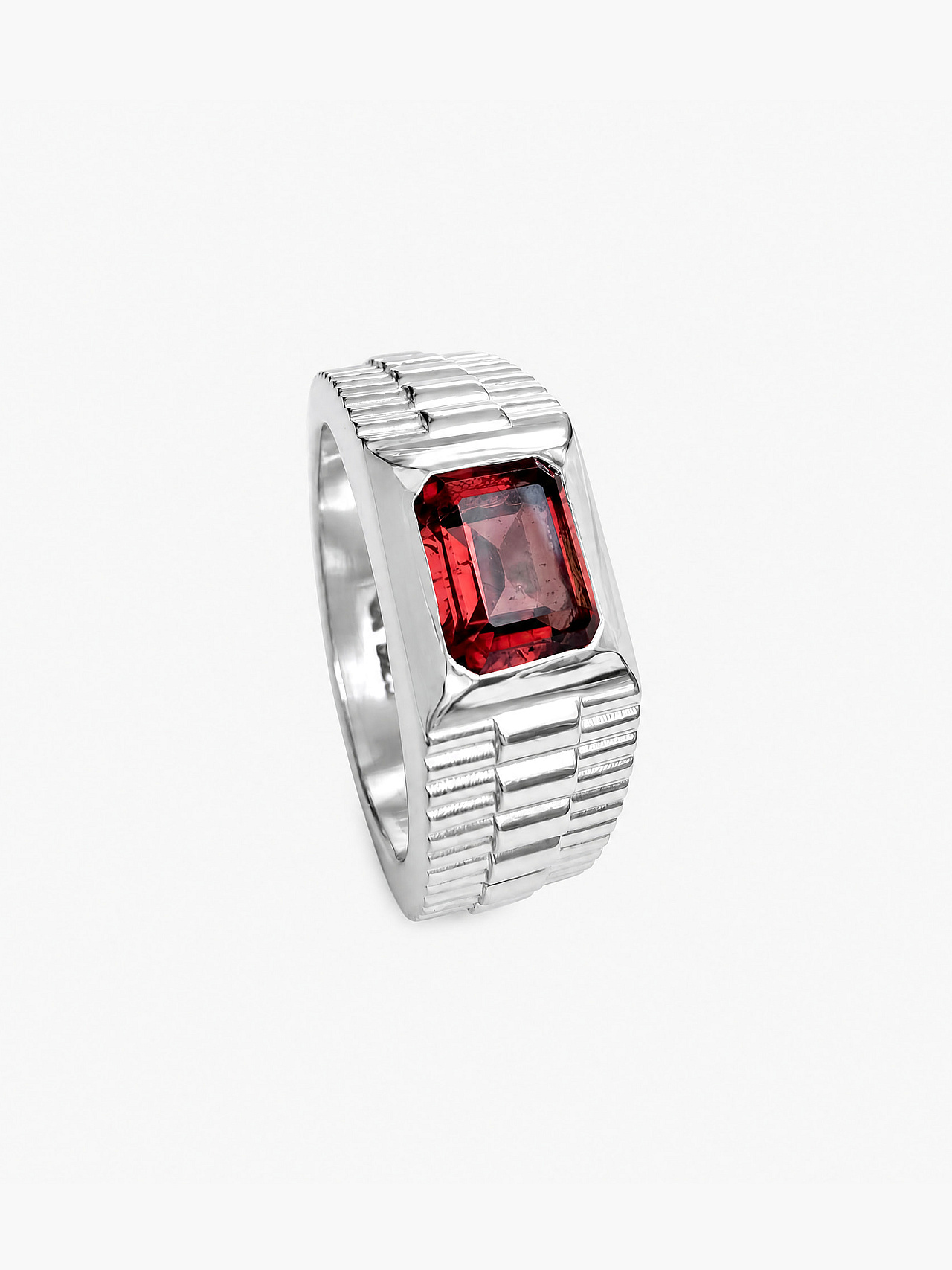
How a drawing, a 2.6 carat garnet from Tanzania and five steps of work become the President ring.

The Outsider

FOUR VIEWS
A ring does not begin at the bench
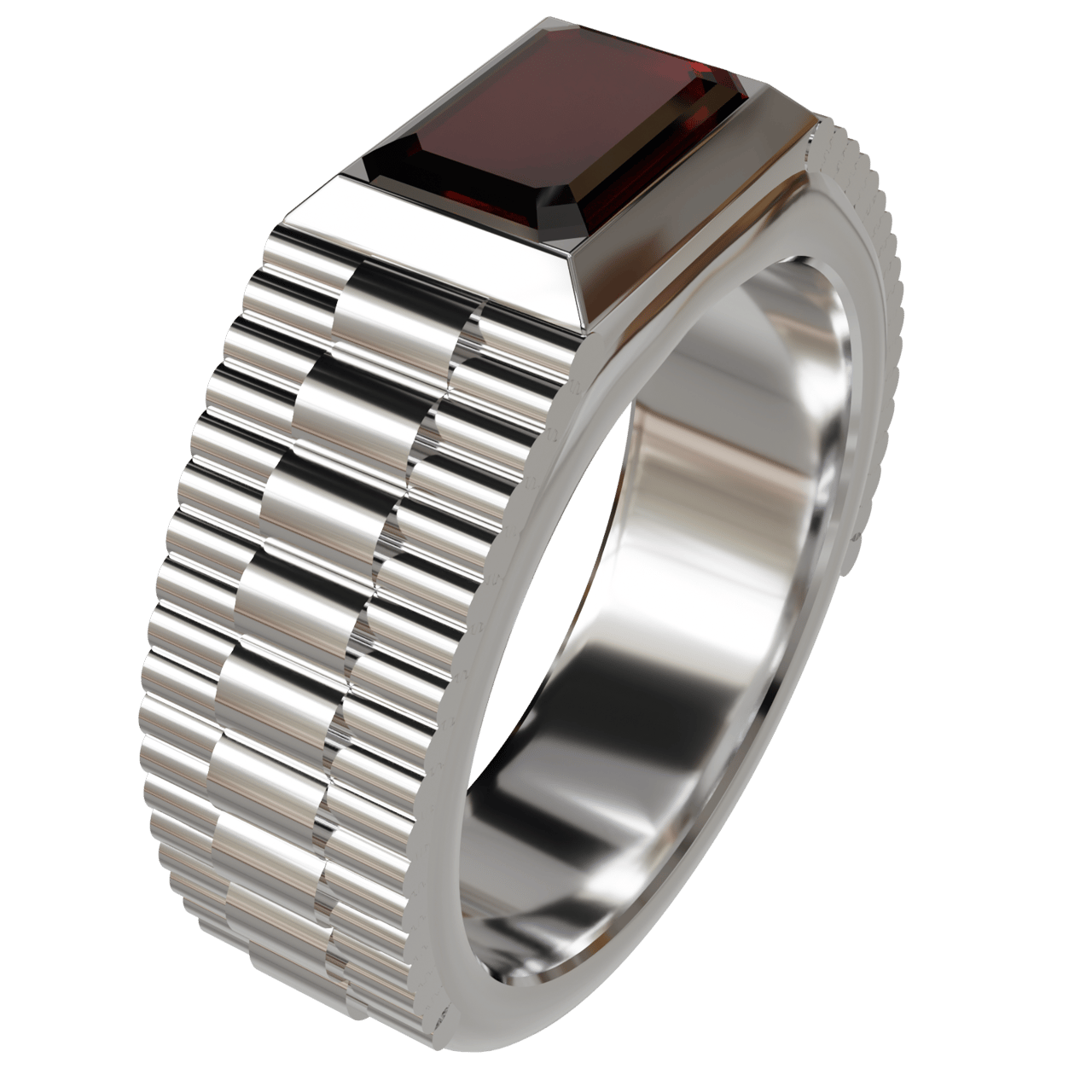
It begins as a drawing you can turn.
The idea: a watch bracelet on your finger
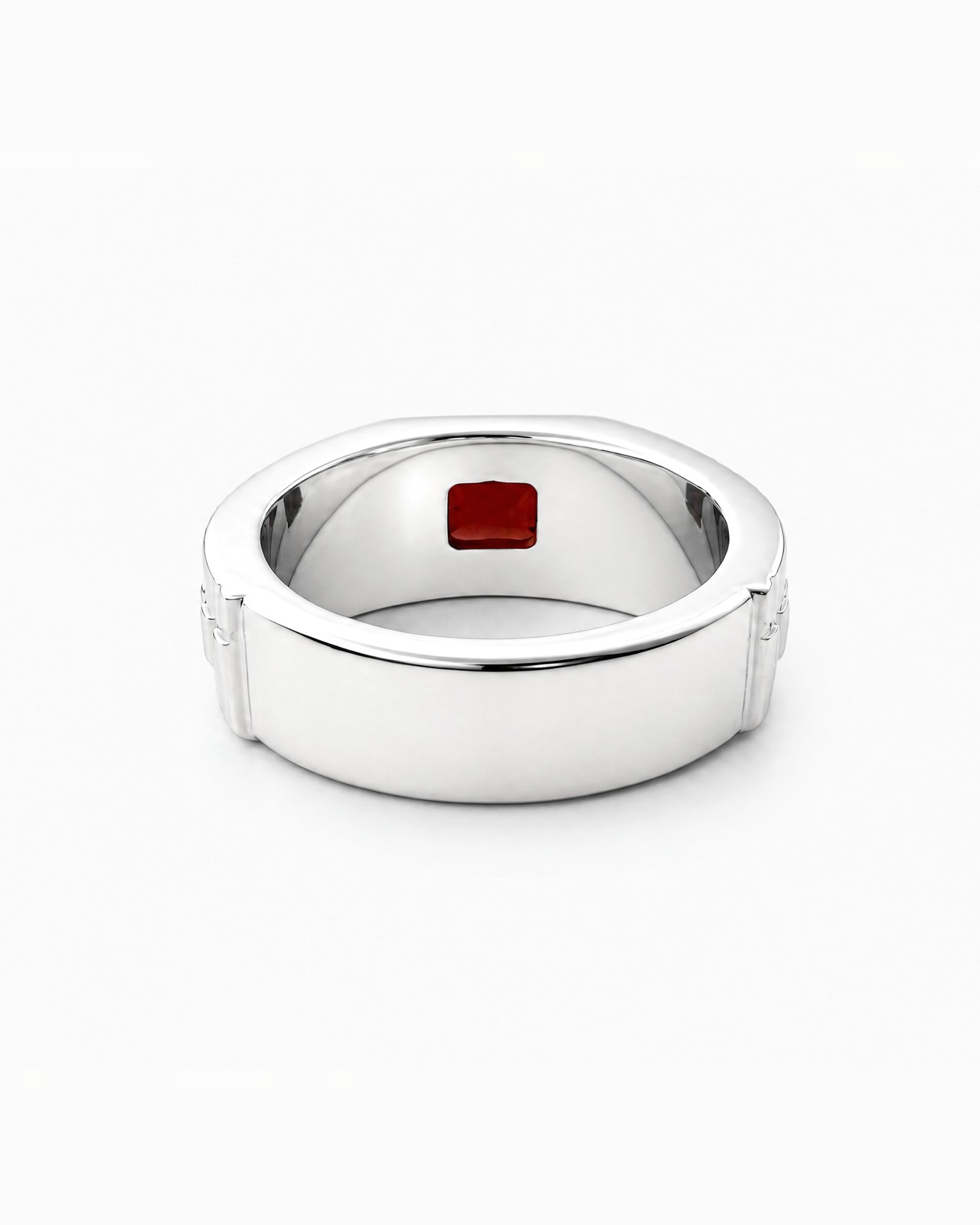
The shoulders of the President are finely ribbed. Anyone holding it for the first time thinks of a watch bracelet - and that is exactly where the idea comes from. A bracelet of links lives on the way light breaks in the grooves and gathers between them. Transfer that to a ring and you get a surface that changes with every movement of the hand.
Against it stands the setting: smoothly polished, unadorned, strict. That contrast is the whole design. The ribs carry the movement, the setting stops it. The band measures eight millimetres, the profile three - dimensions you do not overlook.
What is visible here does not exist as metal yet: a model in which every groove already sits where it will later sit in the silver.

MALAYA GARNET, 2.6 CARATS
The stone: an outsider from Morogoro
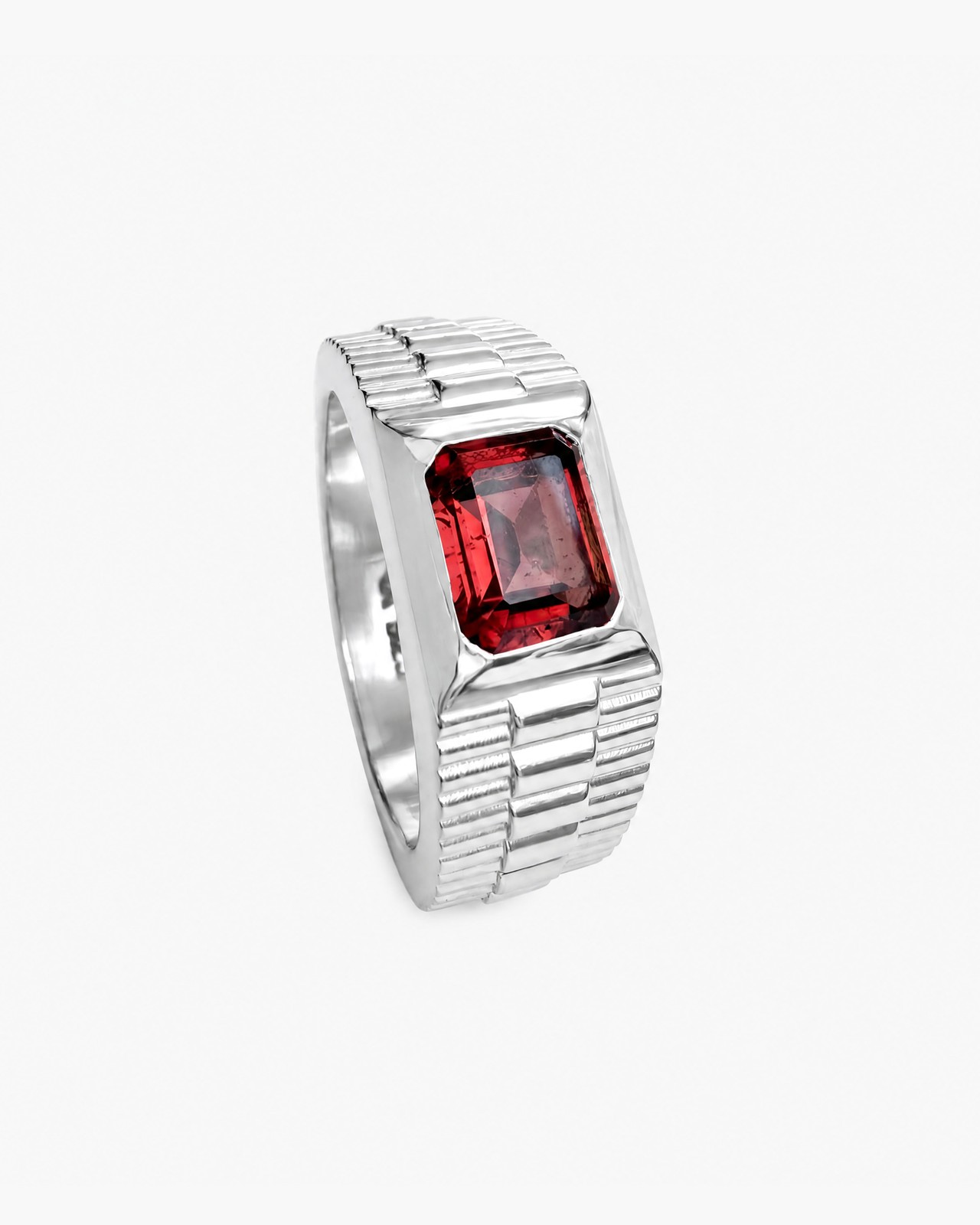
The stone came before the ring. A Malaya garnet of 2.6 carats from Morogoro in Tanzania, untreated, with its natural inclusions.
Malaya garnet is a whim of geology. It forms as a natural blend of pyrope and spessartine - two garnet species that normally occur apart. When traders in East Africa found the first stones of this kind, they fitted no category. So they named it "Malaya" in Swahili: the outsider.
THE NAME
A stone that fitted no category - and was given a name that says exactly that.
Untreated means: what you see is how it grew. No heating, no irradiation. The inclusions are not flaws but the proof of it. They make this ring a one-off - the next stone from the same pit would look different. It belongs to our "from rough to precious" collection.
LAYER BY LAYER
From resin to silver
First it is printed. The 3D model becomes a model in resin, layer by layer, thinner than a hair.
Then comes the casting. The resin model is invested, burnt out and replaced by 925 sterling silver - a process that has stayed the same at its core since the Bronze Age. What comes out of the mould still bears little resemblance to the finished ring.
EVERY GROOVE THE SAME DEPTH
Polishing: where the ribs appear
The casting is dull and grey. Only polishing turns the surface into what makes the ring - and this is where the ribbing is the real work. Every groove must have the same depth, every ridge the same sharpness. A smooth surface forgives an uneven pass. A ribbed one does not.
NO SECOND ATTEMPT
Setting: the last touch that forgives nothing
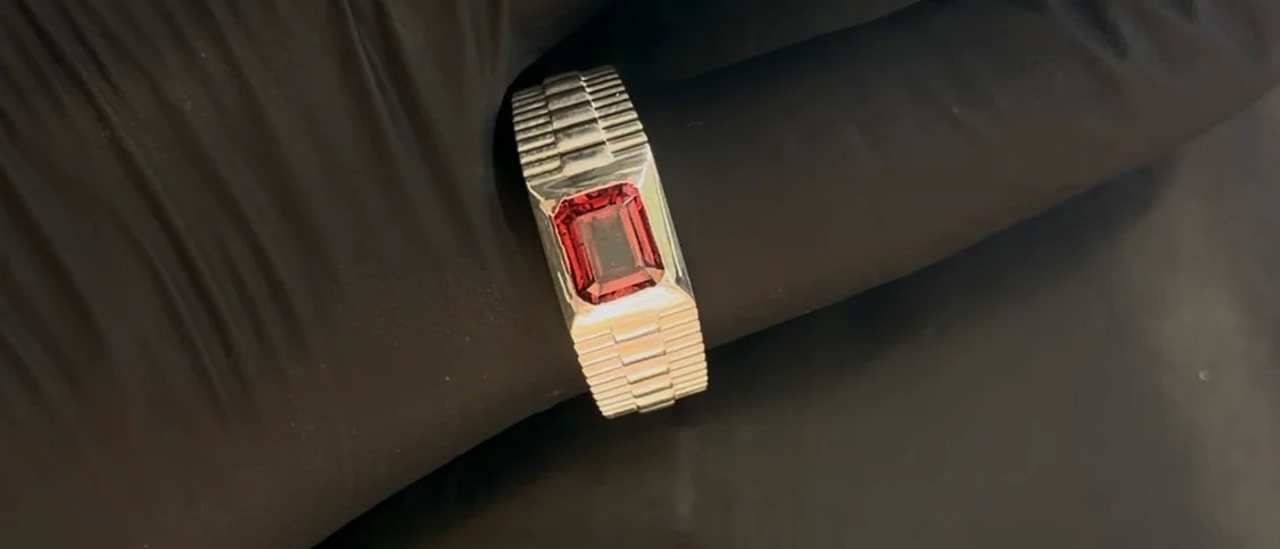
Finally the stone. The metal of the setting is pressed over the edge of the garnet, all around, evenly. Too little pressure and the stone sits loose. Too much, and an untreated garnet with natural inclusions takes it badly.
For this step there is no second attempt with the same stone.
Why all of this
A ring conceived from a watch bracelet, carrying a stone nobody could place. Designed for it, made from 925 sterling silver, in one size and with a stone that exists only once.

FROM ROUGH TO PRECIOUS
What began as a drawing you could turn ends up on a finger.